
Official Biography
Rudolph W. Giuliani Biography
The Honorable Rudolph W. Giuliani is a man who dedicated his life to serving others. His experience in public and private endeavors is too vast to capture fully in a single biography.
Rudolph W. Giuliani (born May 28, 1944, Brooklyn, NY) is an American lawyer and public official whose career spans senior federal law-enforcement roles and executive municipal leadership as the 108th Mayor of New York City. Educated at Bishop Loughlin Memorial High School and Manhattan College, he received his J.D. from New York University School of Law and built an early reputation in prosecution and public-service roles (Britannica, 2024; Manhattan College, n.d.; New York University School of Law, n.d.).
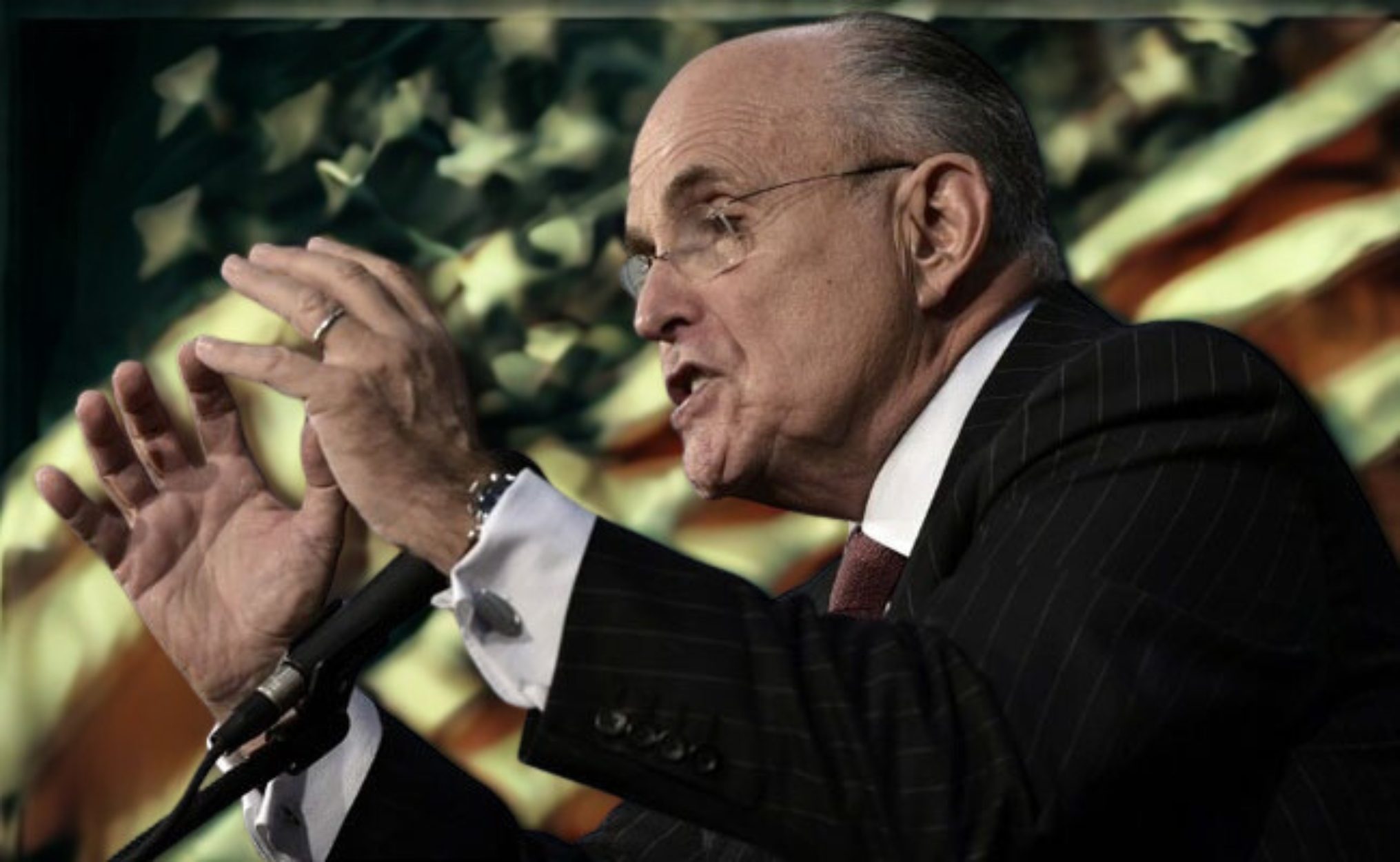
Public Service
Federal Career and Department of Justice Leadership
Giuliani served in senior Justice Department posts during the Reagan administration, including as Associate Attorney General (1981–1983). He exercised oversight of the Department’s law-enforcement components and national initiatives, coordinating among U.S. Attorneys, the Criminal Division, the Drug Enforcement Administration (DEA), the Bureau of Prisons, the Immigration and Naturalization Service (INS), and related units. He led interagency task forces on violent crime and drug enforcement strategies (U.S. Department of Justice, n.d.; Britannica, 2024). During his federal service, Giuliani argued cases in multiple U.S. Courts of Appeals and before the U.S. Supreme Court and took part in high-level operational coordination during national law-enforcement incidents and immigration crises (U.S. Department of Justice, n.d.; New York Times, 1989).
Notably, on March 30, 1981, Giuliani oversaw aspects related to the arrest of John Hinckley Jr., who tried to assassinate President Reagan.
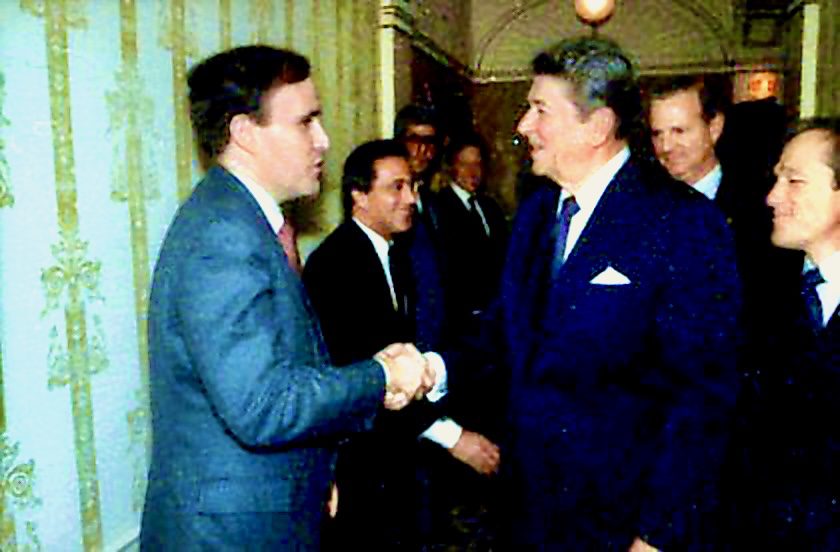
Legacy of federal service
Observers and retrospective accounts attribute to Giuliani, a managerial approach that emphasized accountability, specialization, cooperation between federal, state, and local law enforcement. These changes influenced later prosecutorial practice (Britannica, 2024; US Department of Justice, n.d.).
Federal Prosecution
U.S. Attorney, Southern District of New York (1983–1989)
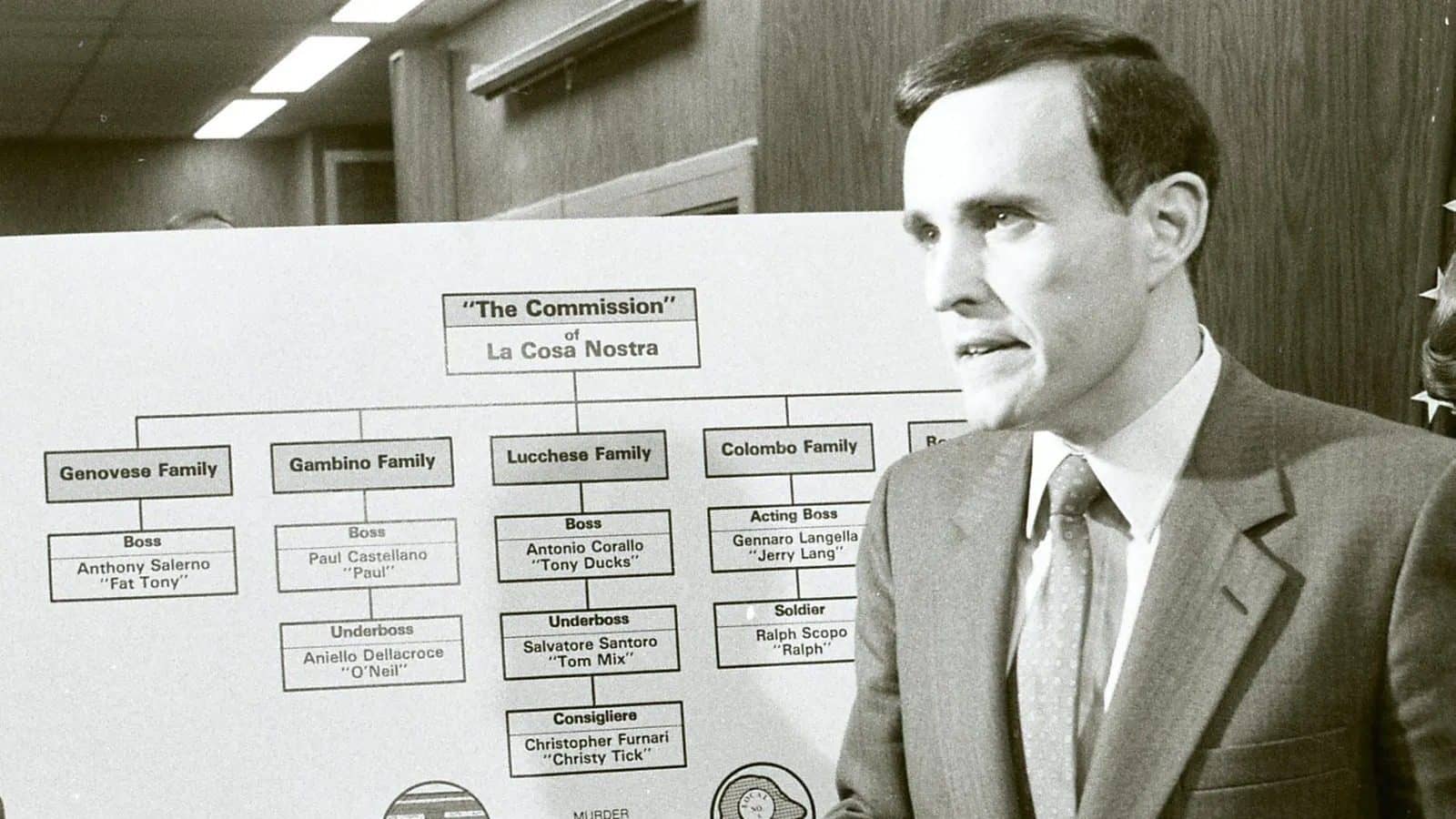
As U.S. Attorney for the Southern District of New York (SDNY) from 1983 to 1989, Giuliani reorganized and professionalized the office, created specialized strike forces and task forces focused on narcotics, organized crime, racketeering, and complex financial fraud, and emphasized rigorous grand jury and trial practice (New York Times, 1989; The Washington Post, 1989).
Giuliani reorganized investigative units, created specialized strike forces and task forces to target narcotics, racketeering, and corporate fraud, and emphasized speedy, meticulous grand-jury and trial work. Under his leadership, the SDNY secured a string of high-profile convictions that underscored its ability to take on entrenched criminal organizations and corrupt officials. He placed an early emphasis on combining traditional street-level prosecutions with sophisticated financial and document-driven investigations, raising the office’s capabilities in forensic accounting and complex case management. Giuliani also cultivated a culture of mentorship and high ethical standards among prosecutors.
His tenure expanded the office’s capabilities in forensic accounting and document-driven investigations and cultivated a prosecutorial culture that produced numerous alumni who later held senior posts in government and private practice (New York Times, 1989).
Giuliani was involved in the U.S. government's legal efforts against Nazi war criminals who had immigrated to the United States. These cases were primarily denaturalization and deportation proceedings (civil/administrative actions under immigration law, handled with the Justice Department's Office of Special Investigations), rather than full criminal trials for war crimes in U.S. courts.
The most prominent example tied directly to Giuliani is the case of Karl Linnas. Linnas was accused of serving as the commandant of a Nazi concentration camp in Tartu, Estonia, during World War II, where he allegedly took part in the persecution and execution of Jews and others. Giuliani's office represented the government in appeals and hearings related to Linnas's deportation to the Soviet Union (where he had been convicted in absentia of war crimes).
Key developments included: A 1986 Second Circuit Court of Appeals decision upholding deportation, with Giuliani listed as U.S. Attorney on the government briefs. Courtroom sketches from 1987 showing Giuliani at a "Nazi hearing" or deportation proceeding for Linnas. Giuliani's office filed documents opposing stays of deportation.
Legacy and professional reputation
Observers credit his SDNY leadership with modernizing investigative approaches and enhancing the district’s national standing, while his later career in municipal government further amplified his public profile (Britannica, 2024; New York Times, 2001).
Municipal Leadership
108th Mayor of New York City (1994–2001)
As a Republican in a heavily Democratic city, Giuliani campaigned on themes of law and order, quality-of-life improvements, and fiscal responsibility. His tenure is often credited with transforming NYC from a city plagued by high crime and urban decay in the early 1990s into one seen as safer, cleaner, and more economically vibrant by the end of his term.
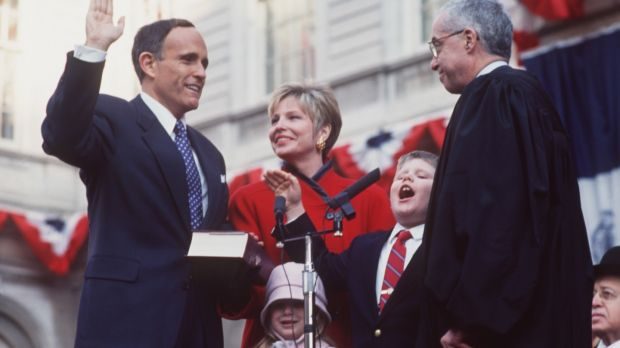
Dramatic Reduction in Crime
Giuliani's administration is widely associated with a sharp decline in crime rates, which helped restore public safety and boost tourism/economic confidence. Key elements included:
- Adoption of the "broken windows" policing strategy (developed with theorist James Q. Wilson), focusing on minor offenses to prevent larger crimes.
- Introduction of CompStat, a data-driven system for tracking crime patterns and holding precincts accountable (which won awards and became a model for other cities).
- In 1996, CompStat was awarded the Innovations in American Government Award (also referred to as the Innovations in Government Award), jointly sponsored by the Ford Foundation and Harvard's Kennedy School. This award recognized CompStat as one of the most innovative and effective public-sector programs nationwide, selected from a large pool of applicants for its novelty, effectiveness, significance, and potential for replication. The program was hailed for its data-driven approach to crime management—using timely crime statistics, mapping, accountability meetings, and strategic resource deployment—which contributed to sharp reductions in crime and became a model adopted by police departments across the U.S. and beyond.
- Aggressive enforcement against issues like subway fare evasion, panhandling ("squeegee men"), graffiti, and organized crime influence in markets (e.g., Fulton Fish Market and solid waste removal, saving businesses hundreds of millions).
Statistics from the period (comparing 1993 to 2001):
- Overall FBI index crime dropped by about 56% (far outpacing the national decline of ~16%).
- Murders fell by around 66%.
- Shootings and other violent crimes saw similar steep reductions.
- NYC became recognized as the safest large city in the U.S. by FBI metrics.
These trends began slightly under the prior administration but accelerated significantly under Giuliani.
Economic and Fiscal Reforms
- Turned a projected multi-billion-dollar budget deficit into a surplus (e.g., from a $2.3 billion deficit in the mid-1990s to a $2.9 billion surplus by FY 2001).
- Reduced or eliminated 23 taxes (including sales, income, and business taxes), saving residents and businesses over $9 billion.
- Reformed welfare programs by converting offices into Job Centers and implementing work requirements, reducing the welfare rolls by about 640,000 people (nearly 60%) to the lowest levels since the 1960s—the largest such drop in the nation at the time.
Urban Revitalization and Quality of Life
- Oversaw redevelopment projects, including the transformation of Times Square from a seedy area of peep shows and crime into a family-friendly hub with theaters, media outlets, and corporate presence (building on prior initiatives).
- Increased funding for public education while cutting overall city budgets and workforce in other areas.
- Promoted tourism and economic growth, making NYC more attractive to visitors and businesses.
Crisis Leadership
September 11, 2001
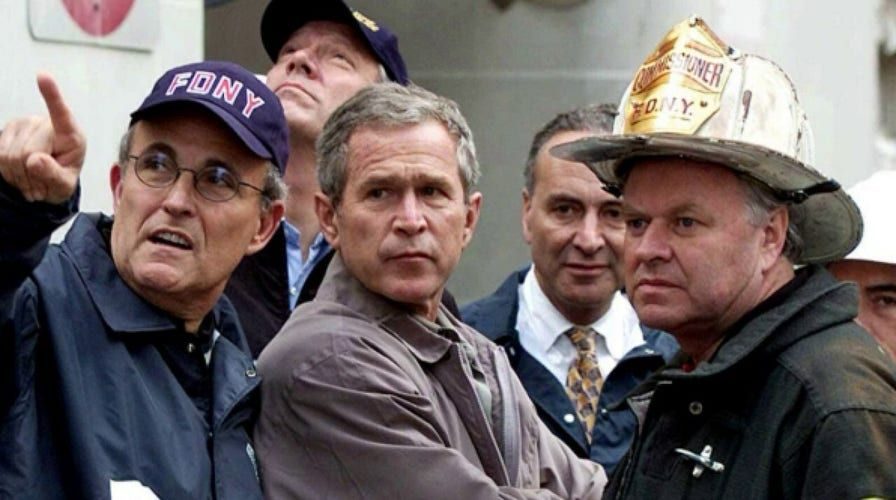
On the morning of September 11, 2001, Rudy Giuliani began what he expected to be a relatively calm day in New York City—Primary Election Day, when he cancelled his typical morning meeting so staff can go vote. He was having a relaxed breakfast at the Peninsula Hotel in midtown Manhattan with old friends and colleagues: Bill Simon, a former Assistant U.S. Attorney discussing a potential run for California governor, and his chief counsel, Dennison Young. The conversation was light, touching on politics, family, and baseball, under clear blue skies that made the city feel especially vibrant and peaceful.
That ordinary moment shattered when Detective Patti Varrone from his NYPD security detail interrupted to report that a plane had struck the North Tower of the World Trade Center, causing a massive fire. Giuliani initially assumed it was a tragic accident involving a small aircraft, but he immediately rose to head to the scene. As he and his team moved south, the second plane hit the South Tower, confirming this was no accident but a deliberate terrorist attack. The realization hit hard: priorities shifted instantly to establishing command, evacuating people, and coordinating emergency response.
Giuliani rushed toward the disaster on foot with Police Commissioner Bernard Kerik, Fire Commissioner Thomas Von Essen, and others, witnessing the unfolding horror—people fleeing, jumpers from the towers, and thick smoke. They set up a temporary command post in a building at 75 Barclay Street near the site. While inside attempting to contact higher authorities, the South Tower collapsed at 9:59 a.m., sending a choking wave of debris and dust that trapped Giuliani's group in darkness, blocked exits, and near-zero visibility for 10-15 minutes. A maintenance worker helped guide them to an open exit on the north side. Emerging covered in ash and coughing, they pressed on, walking north through chaos.
After the North Tower fell at 10:28 a.m., the city was enveloped in even greater devastation—fires raging, debris everywhere, and fears of more attacks. Giuliani regrouped with his team, reestablished communications, and focused on immediate actions: rerouting subways, securing supplies through closed tunnels, mobilizing the full police force, and visiting Ground Zero multiple times to assess the situation firsthand and support responders. Throughout the day and into recovery efforts, he emphasized calm communication to reassure the public, projecting optimism amid grief and emphasizing New York City's resilience. In his book Leadership, Giuliani frames these hours as the ultimate test of preparation, composure, visibility, and decisive action—principles that enabled him to lead through unimaginable crisis toward the long road of recovery.
Together, Giuliani’s leadership and the people of NYC accomplished the greatest evacuation of over a million people from Lower Manhattan.
The controversy surrounding air quality at Ground Zero centers on public statements from the EPA—particularly under Administrator Christie Todd Whitman—that the ambient air in Lower Manhattan was "safe to breathe" (e.g., a September 18, 2001, press release stating: "I am glad to reassure the people of New York ... that their air is safe to breathe"). Confident in the EPA, city officials echoed these statements. Former EPA head Whitman admitted in 2016 that her assurances were wrong in hindsight, saying: "I'm sorry. We did the very best we could at the time with the knowledge we had." There are a significant number of people, including Giuliani, who suffer from restrictive air disease, and cancers.
In the weeks and months following the terrorist attacks Giuliani made personal attendance at funerals, wakes, and memorial services a visible and sustained component of the city’s official response, appearing frequently to console grieving families and honor fallen first responders (Time, 2001). Giuliani attended high-profile services for FDNY and NYPD members killed on 9/11, including memorials and funerals for senior Fire Department figures and chaplains; his public remarks and presence at these services were widely reported and became part of the public record of the city’s mourning (Kuo, 2001). City Hall, under the mayor’s direction, organized and supported citywide and departmental commemorations — including interdenominational family memorials and FDNY ceremonies for the 343 firefighters who died — and the Mayor’s Office issued press announcements documenting these events and his role in convening them (Mayor’s Press Office, 2001). Contemporary press coverage and retrospective accounts emphasized the frequency and emotional weight of these duties: journalists reported that the mayor attended an extraordinary number of services for victims and first responders, and wire stories captured his own acknowledgement of the overwhelming number of funerals in that period (United Press International, 2001). Beyond the most prominent services, Giuliani routinely attended smaller community funerals and departmental memorials, participating in ritual acts of remembrance (wreath layings, eulogies in official capacity, moments of silence) that many families and colleagues described as important civic recognition of their losses (The Guardian, 2001; The New York Times, 2001). Taken together, the mayor’s repeated presence at funerals and memorials complemented the broader emergency management and recovery work of city government by providing a personal, symbolic form of consolation that was widely credited in contemporaneous reports with helping New Yorkers grieve and begin communal recovery (NPR, 2001).
Recognition
Selected Honors and Awards (chronological highlights)
- 1989: Honorary Law Degree, Syracuse University
- 1998: Gold Medal Award, The Hundred Year Association of New York.
- 2001: Time Person of the Year, Time magazine (for leadership following September 11 attacks).
- December 2001: Knight Grand Cross of the Order of Merit of Savoy, House of Savoy.
- February 13, 2002: Honorary Knight Commander of the Order of the British Empire (KBE), Queen Elizabeth II (for 9/11 leadership; honorary, no "Sir" title).
- 2002: Ronald Reagan Freedom Award, Nancy Reagan/Ronald Reagan Presidential Foundation.
- 2002: Fiorello LaGuardia Public Service Award, Episcopal Diocese of New York.
- 2002: John Heinz Award, Jefferson Awards.
- October 28, 2002: Medal of Heroism, Czech President Václav Havel.
- 2003: Golden Plate Award, Academy of Achievement.
- 2003: Doctor of Laws (honoris causa), University of Rhode Island.
- 2005: Honorary Degrees, Loyola College in Maryland and Middlebury College
- 2006: Honorary Doctorate in Public Administration, The Citadel.
- 2007: Margaret Thatcher Medal of Freedom, The Atlantic Bridge.
- 2007: Special Achievement Award, National Italian American Foundation.
- 2009: Honorary Degree, Drexel University's Earle Mack School of Law
- 2013: Robert C. Vance Distinguished Lecturer, Central Connecticut State University.
- September 1, 2025: President Donald Trump announced that Giuliani will receive the Presidential Medal of Freedom, (nation's highest civilian honor for contributions to national security and public service).
Private Sector And Consulting
Post-Mayoral Career: Founding Giuliani Partners (2002–2020)
Giuliani founded Giuliani Partners in January 2002, a security, management, and crisis consulting firm focused on emergency preparedness, public safety, leadership in crises, and financial management—drawing directly from his NYC experience turning around crime rates and managing the post-9/11 recovery. The company quickly grew, reportedly earning over $100 million in its first five years, with Giuliani as chairman and CEO (he later returned after political pursuits). It employed many former aides from his mayoral administration and offered services to governments, businesses, and international clients. Giuliani's post-9/11 fame drove demand: he commanded high speaking fees (millions annually in the early 2000s), authored the book Leadership (2002), and positioned himself as an expert in security and resilience.
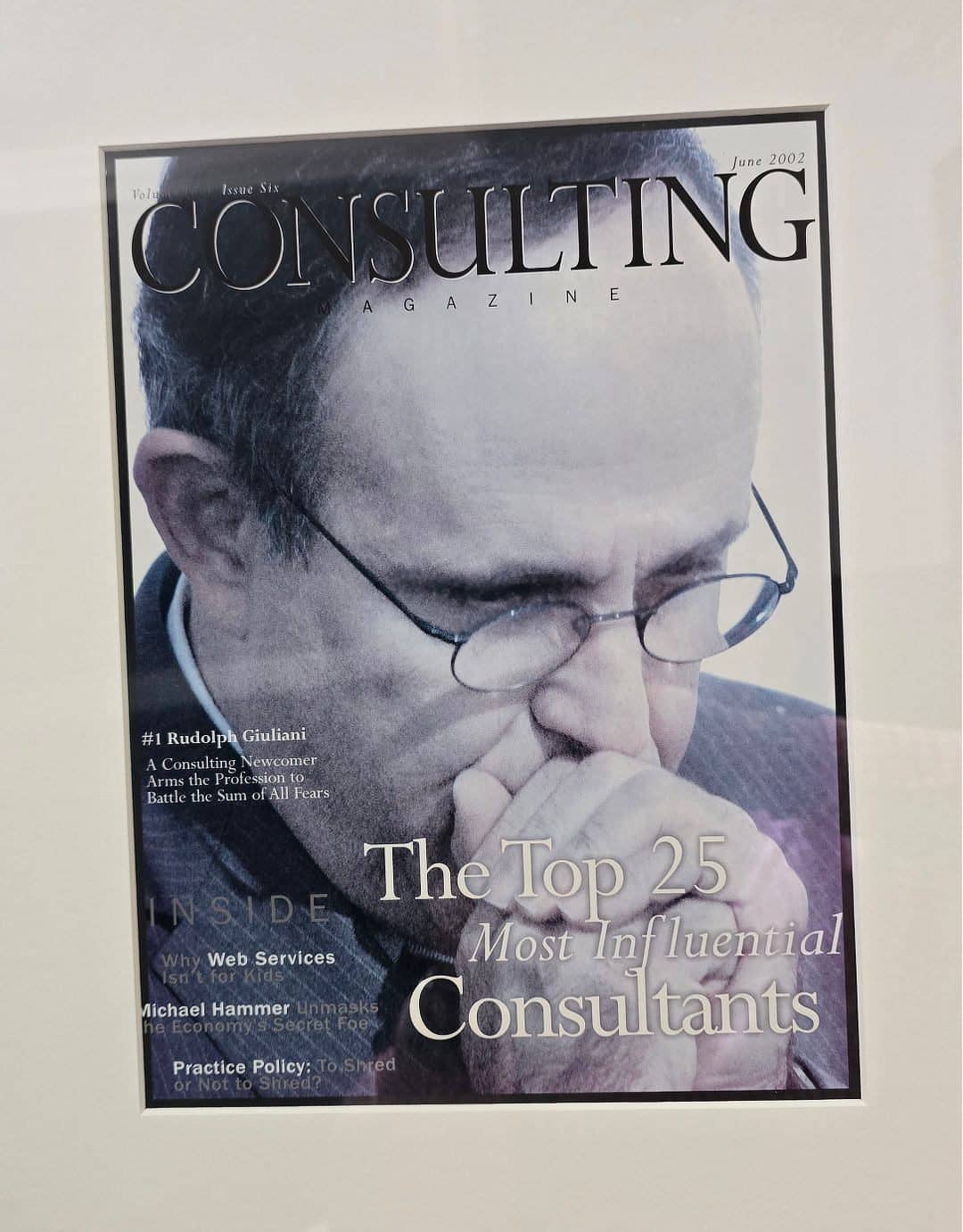
Recognition as "Consultant of the Year"
In spring 2002, shortly after launching the firm, Giuliani was named Consultant of the Year (sometimes phrased as "best consultant" in summaries) by Consulting magazine. This award highlighted his rapid success in establishing Giuliani Partners as a leader in strategic consulting, emergency preparedness, and applying urban governance lessons globally. Sources like his official bios, speaking agency profiles, and contemporary reports (e.g., from Union University events and The Art Of agency) explicitly credit this recognition to his post-mayoral work and the firm's early momentum.
This accolade came amid his broader honors, like the Ronald Reagan Presidential Freedom Award (2002) and others tied to his 9/11 response.
International Consulting and Travel
Giuliani frequently referenced his extensive global work in interviews and speeches. In a 2007 Meet the Press appearance and other contexts (e.g., 2016 Reuters profile), he said he had visited around 80 countries (with roughly 150 foreign trips) since leaving office—often for speeches, security consulting, or advisory roles. This included advising on crime reduction, emergency management, and public safety strategies inspired by his NYC policies.
Notable examples of international clients/work (from reports across the 2000s–2010s):
- Mexico City (multi-million-dollar contract for security/crime reduction).
- Qatar (security advice for oil/gas facilities and police training).
- Various Latin American countries (e.g., Brazil, Colombia, Peru, Uruguay for political/security consulting).
- Others like Bahrain, Türkiye, Ukraine (e.g., advising mayoral candidates), and more.
Cultural And Media Appearances
Entertainment and Screen Credits
Hosting Appearance On Saturday Night Live (when it was funny)
- November 22, 1997 (Season 23, Episode 7) — Mayor Rudy Giuliani hosted with musical guest Sarah McLachlan. This was his only time hosting SNL. Giuliani played himself in the monologue and participated in several sketches, showing a willingness to poke fun at his own “tough mayor” image. The episode is remembered as a solid outing for a non-actor politician host.
Sketches Giuliani Appeared In (November 22, 1997)
- Monologue — Giuliani opened the show, joking about New York City life and his decision to host.
- Janet Reno’s Dance Party — Giuliani appeared as himself alongside Will Ferrell’s Janet Reno; the sketch ended with a mock boxing match to settle who was “tougher.”
- Friggin’ Giuliani! — A New York cabbie (played by another cast member) complained loudly about Mayor Giuliani’s policies to his passengers — while Giuliani himself sat in the backseat.
- The Joe Pesci Show — Giuliani appeared as himself on Joe Pesci’s talk show (hosted by Jim Breuer), where Pesci’s abrasive character clashed with the mayor over anti-mob and quality-of-life initiatives.
- Graffiti Ad — Giuliani unveiled a satirical anti-graffiti campaign in which the city would simply add the word “sucks” under every tagger’s name.
- Other quick bits and interactions throughout the episode.
(Note: Two additional sketches featuring Giuliani as a tour guide and in another role were cut after dress rehearsal.)
Cameo Appearances (Playing Himself)
According to SNL records, Giuliani made the following non-hosting cameos:
- January 13, 1996 — Brief pre-hosting cameo (during his early mayoral years).
- September 29, 2001 — Post-9/11 appearance in a supportive, non-comedic segment reflecting the somber national mood.
- December 15, 2001 — Another post-9/11 cameo, often tied to tributes to “America’s Mayor.”
- March 1, 2008 — Brief cameo.
Here are his notable film appearances, based on reliable sources like IMDb and film databases:
- Anger Management (2003) Directed by Peter Segal, starring Adam Sandler and Jack Nicholson. Giuliani has a cameo as himself (credited as "Mayor Rudy Giuliani"), appearing in a scene at Yankee Stadium where he intervenes to help calm a chaotic situation. It is a fun, quick bit in this comedy about anger issues.
- The Out-of-Towners (1999) A comedy remake starring Steve Martin and Goldie Hawn as a couple dealing with mishaps in New York City. Giuliani appears briefly as himself (credited as "Rudolph W. Giuliani - Mayor of NYC"), in a scene poking fun at city life and bureaucracy.
- Happily N'Ever After (2007) – Animated film. He provides voice work or a small role (listed in some filmographies), though it is minor.
Here are his notable scripted TV series appearances (excluding talk shows, news interviews, reality TV like The Masked Singer in 2022, or documentaries where he appeared as himself):
- Law & Order (NBC, 1990–2010)
- Appeared as himself (credited as Mayor Rudy Giuliani) in Season 11, Episode 1: "Endurance" (aired October 18, 2000).
- In this episode, he makes a cameo in a scene related to a case involving a fire and child death suspicions—fitting given his real-life role as mayor.
- Cosby (CBS, 1996–2000)
- Appeared as himself (credited as Rudy Giuliani or Mayor Rudy Giuliani) in one episode (specific episode details vary in sources, but it is a brief cameo during the late 1990s).
- The Simpsons (Fox, animated series)
- Voiced himself in one episode in 2007 (likely a quick cameo or voice bit, as listed in credits).
- Also credited with an appearance in 2016 (possibly a different episode or reprise).
- Seinfeld (NBC, 1989–1998)
- Brief uncredited cameo as himself in one episode (1994, during his early mayoral campaign or transition period).
- Mad About You (NBC, 1992–1999)
- Appeared as himself in Season 3, Episode 10: "The City" (a New York-themed episode with a cameo).
- Happily Ever After: Fairy Tales for Every Child (HBO, animated anthology, 1995–2000)
- Provided voice work or a cameo as himself in one episode.
Political Advocacy
2015–2019: Trump Campaign and Legal Role
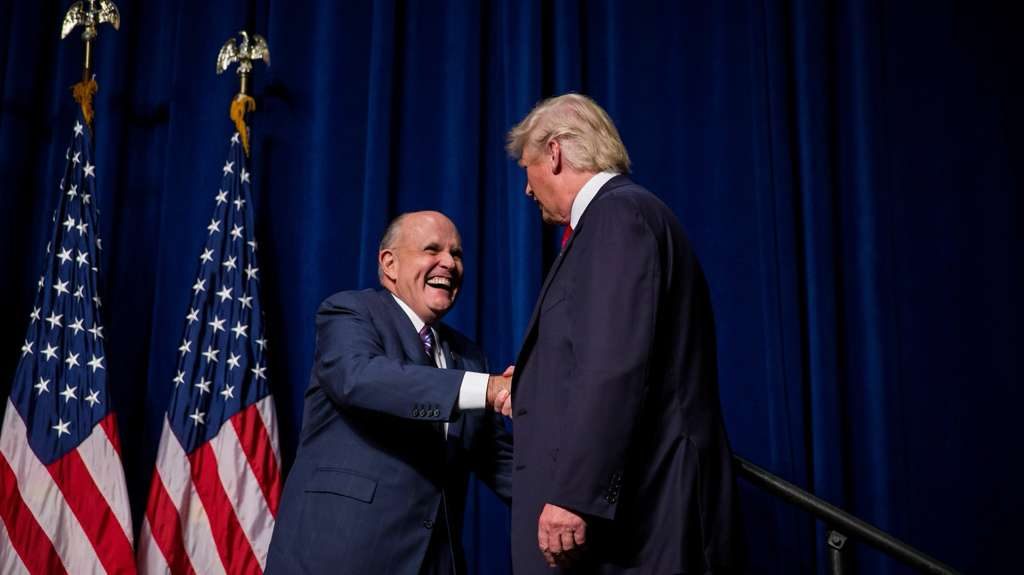
Giuliani played a prominent role in supporting Donald Trump's 2016 presidential campaign, serving as a key advisor and surrogate from approximately 2015 onward. He frequently traveled with the candidate, appeared at rallies, and introduced Trump at events, leveraging his stature as former New York City mayor to bolster the campaign's messaging on law and order, national security, and leadership. Giuliani brought credibility to the campaign. Giuliani delivered a prime-time speech at the Republican National Convention in July 2016 and was a consistent presence at Trump rallies alongside figures like Jeff Sessions.
Following Trump's victory in November 2016, reports indicated that Giuliani was considered for high-level positions in the incoming administration. He was offered the role of Attorney General but declined, expressing a preference for Secretary of State due to his established relationships with international leaders from his post-mayoral consulting work. Ultimately, he withdrew his name from consideration for any Cabinet post in December 2016, citing a desire to avoid potential conflicts with his private business interests.
In April 2018, amid the ongoing special counsel investigation led by Robert Mueller into Russian interference in the 2016 election, Giuliani joined President Trump's personal legal team pro bono. He took an unpaid leave of absence from his law firm, Greenberg Traurig, where he had led the cybersecurity and crisis management practice. The firm subsequently announced his permanent resignation in May 2018, after they gave him an ultimatum, it’s him or us. Giuliani lost that income of 6 million dollars to follow his internal moral compass.
Giuliani appeared extensively in media interviews during 2018–2019, presenting arguments and facts on behalf of his client. He naively believed that regardless of political party everyone would be interested in the truth. His involvement drew significant attention and, according to some accounts, contributed to challenges for his private consulting business, Giuliani Partners, as certain clients reportedly distanced themselves amid the political controversy. Despite these pressures, Giuliani emphasized principles of integrity and commitment to defending what he viewed as a just cause.
This phase marked a significant shift in Giuliani's career from high-profile consulting and public service to a more politically intensive role centered on legal advocacy for the president.
In 2019, while serving as President Donald Trump's personal attorney, Giuliani pursued investigations into the origins of the Steele dossier (a controversial/fake 2016 opposition research document alleging ties between Trump and Russia) and related claims of election interference. Giuliani has stated that his efforts led him to Ukraine, where he met with various officials and sources to gather information.
During these trips and interactions in Ukraine, Giuliani reported being approached by multiple individuals who directed his attention toward allegations of corruption involving former Vice President Joe Biden and his son Hunter Biden's role on the board of Burisma Holdings, a Ukrainian energy company. Giuliani has described receiving documents and materials that he believed suggested improper influence or "selling access" related to the vice presidency. He has maintained that he did not pursue or promote these materials independently for political gain but instead forwarded them to the U.S. Department of Justice (DOJ) for review and potential investigation, as confirmed by then-Attorney General William Barr, who noted the DOJ had established an intake process to vet such information from Giuliani.
Giuliani has publicly stated that he self-funded aspects of these investigative efforts, including travel to Washington, D.C., witness interviews, and related expenses such as hotels. He has claimed this contributed to a significant reduction in his income, as his consulting firm, Giuliani Partners, faced client departures amid the political controversy surrounding his representation of Trump and these activities. Reports from the period indicate that some international clients distanced themselves due to association risks, though exact figures on losses vary and are not fully public.
Concurrently, Giuliani was navigating the final stages of his divorce from his second wife, Judy Nathan, which was finalized in 2019 after contentious proceedings starting in 2018. The settlement involved substantial financial obligations, and post-divorce disputes arose over payments, which the courts recognized were falsely made by his ex-wife. True to Giuliani’s generous nature, he continued to pay for nursing and nursing home fees for his ex-mother-in-law. These personal and professional pressures compounded during this period.
On April 25, 2019, former Vice President Joe Biden announced his candidacy for the Democratic presidential nomination. At that time, the Biden campaign was aware that Rudy Giuliani, serving as President Donald Trump's personal attorney, had previously provided the U.S. Department of Justice with documents and materials related to allegations involving Biden's activities in Ukraine during his vice presidency.
In response to Giuliani's public statements and media appearances advancing these claims, the Biden campaign took steps to challenge their credibility. In September 2019—several months after Biden's announcement—senior campaign advisers, including Anita Dunn and Kate Bedingfield, sent letters to executives at major television networks (including ABC, CBS, NBC, CNN, and Fox News). These letters urged the networks to refrain from booking Giuliani as a guest, asserting that he was promoting unsubstantiated or debunked conspiracy theories related to Ukraine and the Biden family. The campaign argued that providing him a platform without sufficient scrutiny risked disseminating misinformation, and they suggested that live factchecking alone was insufficient to counter the concerns.
The letters characterized Giuliani's appearances as part of a broader effort to spread false narratives, and they called on the networks to exercise editorial discretion in light of these allegations. This outreach was publicly reported by multiple outlets at the time, including The New York Times, Politico, Variety, and others, and it drew criticism from some observers who viewed it as an attempt to limit opposing viewpoints in media coverage.
The unethical behavior of the Biden campaign included allegations about planting false and unflattering stories about Giuliani. The allegation was that the Biden campaign needed to destroy Giuliani’s credibility because he remained highly respected by Democrats and Republicans.
Post-Election Period
2020 election and the aftermath
Giuliani was present at the White House on the evening of November 3, 2020, during the 2020 U.S. presidential election. As vote counting continued into the early morning hours, he and other observers noted clear irregularities and discrepancies in the reported results across several key states.
The following morning, former Florida Attorney General Pam Bondi contacted Giuliani and requested his aid in Pennsylvania, where ballot counting was ongoing. Republican poll watchers alleged they had been denied meaningful access to observe the process for mail-in ballots. Bondi pursued legal action, and a court ruling (initially from a lower court) directed that observers be permitted closer proximity to verify the authenticity of ballots. However, enforcement issues arose, as local officials reportedly did not fully comply with the order in some instances.
This development prompted a broader mobilization of attorneys to collect sworn statements from witnesses. Giuliani and his team gathered hundreds of affidavits from Republican poll watchers and others, primarily asserting that they were unable to adequately observe the handling and counting of mail-in ballots in Pennsylvania and other jurisdictions. Additional allegations emerged in multiple states, including claims that voters were informed they had already cast ballots (potentially due to clerical errors or other issues) and that voter rolls had not been sufficiently purged, leading to instances of ballots cast in the names of deceased individuals.
On November 9, 2020, President Trump publicly designated Giuliani to lead the post-election legal strategy for the campaign. Reports from the period indicate that some campaign staff and attorneys had begun transitioning to other priorities, and there were accounts of internal tensions, including suggestions that certain attorneys were reluctant to collaborate fully with Giuliani due to professional jealousy.
Giuliani observed as several lawsuits filed by the campaign and affiliated groups were dismissed in state and federal courts, including by the U.S. Supreme Court, which declined to hear cases on procedural grounds or for lack of standing, despite arguments citing legitimate legal concerns and precedents.
Giuliani was later recalled to Pennsylvania by Bondi, who organized a press conference on November 7, 2020, at Four Seasons Total Landscaping, a family-owned business in Philadelphia. The venue was selected by Bondi to project a relatable, local image, with additional witnesses present to share their observations. The event drew significant media attention, though it coincided with major networks projecting Joe Biden as the election winner.
Many potential witnesses reportedly struggled to secure legal representation, as some attorneys initially engaged by the campaign withdrew amid pressure from their firms or concerns over political backlash and threats. In one Pennsylvania matter, two attorneys initiated a case but later stepped back, citing such pressures; Giuliani intervened at the last minute to handle that specific filing, Giuliani’s only legal case.
Giuliani assembled a limited team of attorneys to interview witnesses, supported by former New York Police Commissioner Bernard Kerik and others conducting background checks and validity assessments of claims.
Giuliani is credited with developing a brilliant strategy to present witness testimony directly to state legislatures in key battleground states. This approach was based on the constitutional authority of state legislatures over the appointment of presidential electors (under Article II, Section 1), with the argument that they retained ultimate responsibility for election integrity even after delegating administrative functions. Hearings were held in states such as Pennsylvania, Michigan, Arizona, and Georgia, where witnesses testified to massive irregularities.
During a December 3, 2020, hearing before the Georgia State Senate, witnesses provided testimony regarding alleged irregularities in the 2020 election process. Attorney Kurt Olsen (often referred to in reports as part of the presentation team) highlighted surveillance footage from State Farm Arena in Fulton County, where absentee ballots were tabulated.
Georgia law requires that ballot counting occur in the presence of poll watchers and the public to ensure transparency. According to claims presented at the hearing, observers and media were instructed to leave the facility around 10:30 p.m. on election night, reportedly due to a water leak. The footage shows election workers resuming counting after the observers departed, pulling ballot containers (described by some as "suitcases") from under a table and continuing to scan ballots. Some analyses, including reports from outlets like The Gateway Pundit, suggested the video showed ballots being scanned multiple times.
Georgia Secretary of State Brad Raffensperger had a report outlining many irregularities in the 2020 election, but he did not immediately disclose the document to the public.
Witnesses applauded Giuliani for integrity and his willingness to ‘represent’ them. Giuliani travelled to many swing states where residents of those states were able to tell legislators about the fraud they witnessed.
In Wisconsin, a Waukesha County Circuit Court judge issued a ruling in early 2022 (stemming from post-2020 litigation) that absentee ballot drop boxes and certain third-party ballot collection practices lacked explicit statutory authorization under state law. This decision contributed to broader debates about election procedures, prompting the public to demand for accurate voter rolls and voter ID. A retired judge authored a scathing report outlining massive fraud through ballot harvesting.
In some instances, legislators acknowledged concerns and drafted letters to Vice President Mike Pence, expressing reservations about the certified results and requesting additional time for investigation prior to the January 6, 2021, electoral vote certification. Vice President Pence did not grant these requests, proceeding with the joint session of Congress as scheduled.
While the Trump campaign reportedly made assurances of compensation for Giuliani's extensive efforts and strategic contributions, no public confirmation exists of such payments being made.
The 2016 documentary Kill Chain: The Cyber War on America's Elections (premiered on HBO in March 2020, though production drew from events including the 2016 U.S. presidential election) examines vulnerabilities in U.S. electronic voting systems. Directed by Simon Ardizzone, Russell Michaels, and Sarah Teale (the team behind the 2006 film Hacking Democracy), it centers on Finnish cybersecurity expert Harri Hursti, who demonstrates how outdated voting machines—often using removable media like memory cards or USB drives—can be accessed, manipulated, or compromised with relatively simple techniques. The documentary argues that electronic systems remain "ridiculously broken" and hackable, advocating for reforms such as paper ballots (which provide an auditable trail) and stronger safeguards against foreign or domestic tampering. It highlights bipartisan concerns, including Senators Amy Klobuchar (D-MN) and Bernie Sanders (I-VT) noting that experts from various backgrounds—including cybersecurity professionals, statisticians, and lawmakers—view these issues as a threat to democratic integrity.
Despite bipartisan concerns over election integrity, no major legislation has been enacted, including: Voter ID, one week only of early voting, paper ballots only, no mail in ballots with absentee ballots used for military or other extraordinary circumstances
Unfair disbarment of Giuliani’s law license
Proceedings stemmed from grievances (e.g., Corrupt New York State Bar Association, far left leaning-Lawyers Defending American Democracy) citing false statements on 2020 election (nycourts.gov). Critics/Giuliani argued unfair/biased processes (restrictions on testimony/evidence). These proceedings prompted discussions on bar impartiality/conflicts in political cases. There was a widespread bipartisan call to reinstate the license (especially post-federal pardon November 2025).
Growing public concern over censorship/radical left-wing propaganda (YouTube, Google, etc.) as a grave issue in America. Furthermore, AI models pull information from the false propaganda on the internet. Whether USAID monies were used to discredit Giuliani has yet to be determined.
Present Day
Rudy Giuliani Today
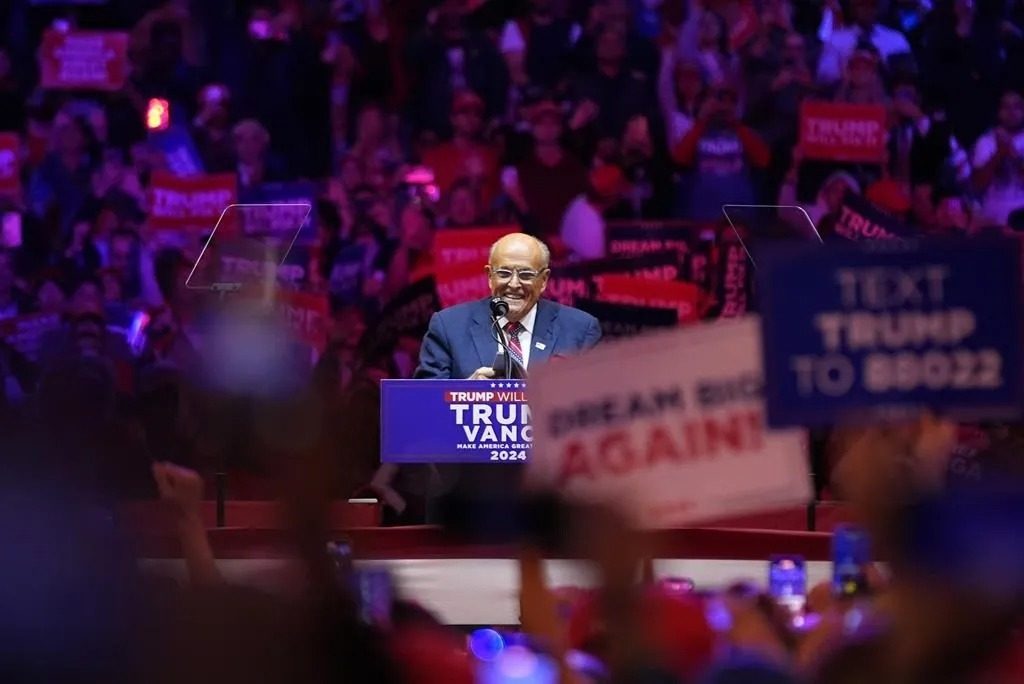
Giuliani maintains a significant public presence in the present day, with many supporters viewing him as a respected figure whose legacy endures despite polarized media narratives. He continues to engage with audiences worldwide through speaking engagements, media appearances, and analysis of political and policy issues.
Giuliani is frequently welcomed at events and gatherings, where attendees often seek photos and express appreciation for his past leadership, particularly his role in reducing crime in New York City during the 1990s and his crisis management following the September 11, 2001, attacks. Supporters highlight that in diverse communities, including minority neighborhoods in New York, he is remembered positively for improvements in public safety, quality of life, and economic conditions that benefited residents across demographics.
The 2023 documentary Gotham: The Fall and Rise of New York examines the city's trajectory under six mayors from 1966 to 2013, crediting Giuliani's policies—such as "broken windows" policing and data-driven strategies—with contributing to substantial declines in violent crime, including in communities disproportionately affected by crime. The film and related commentary have noted that these reductions saved numerous lives, with some analyses emphasizing positive impacts in Black and minority neighborhoods through safer streets and revitalized areas.
In his current professional endeavors, Giuliani is involved in business activities focused on media, public speaking, and business development.
Giuliani hosts two nightly programs providing commentary on current events, politics, and policy and sports:
- The Rudy Giuliani Show, airing from 7:00 p.m. to 8:00 p.m. EST on LindellTV.com, with simulcasts and related content on platforms like X.
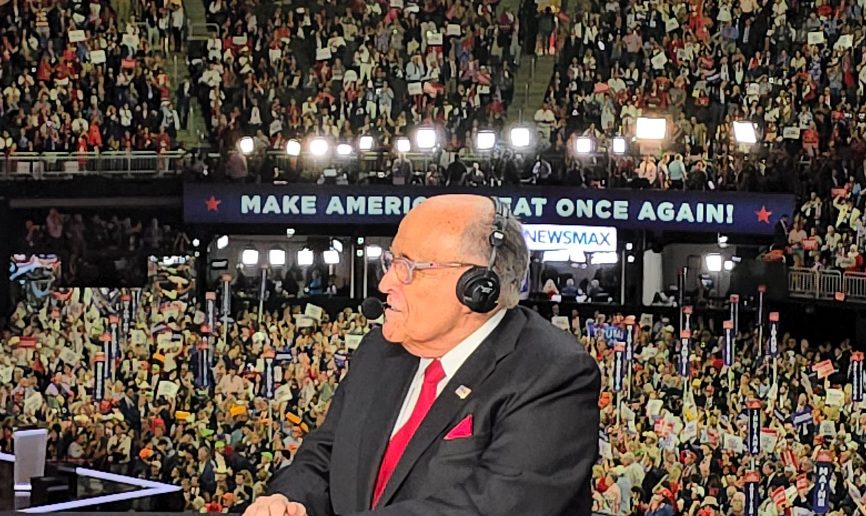
- America’s Mayor Live, broadcast at 8:00 p.m. EST on X (his official account @RudyGiuliani), Newsmax 2, and additional outlets.
These shows attract dedicated viewers who tune in for his insights, with episodes often drawing significant engagement through live discussions and audience interaction. Giuliani's ongoing media work reflects his continued role as a commentator and analyst in conservative and independent circles.
Public reception to Giuliani is outstanding, with powerful support among those who value his historical contributions and respect for his integrity and honesty. Recent events, such as his participation in high-profile gatherings (e.g., announcements for galas and appearances), underscore his enduring appeal to the public.
Sources
References and Additional References
References (APA 7th edition, consolidated from provided sources)
- Britannica. (2024). Rudolph W. Giuliani.
- Manhattan College. (n.d.). Notable alumni: Rudolph W. Giuliani.
- New York University School of Law. (n.d.). Alumni profile: Rudolph W. Giuliani.
- U.S. Department of Justice. (n.d.). History: Organization and leadership.
- New York Times. (1989). Profiles and coverage of Rudolph W. Giuliani’s tenure as U.S. Attorney.
- The Washington Post. (1989). Coverage of SDNY prosecutions and institutional reforms under Giuliani.
- Time. (2001). Mayor of the world — Person of the Year 2001.
- Kuo, D. (2001, October 8). The Chief. The New Yorker.
- Mayor’s Press Office. (2001). Press releases — World Trade Center family memorial and FDNY ceremonies.
- United Press International. (2001, September 29). Giuliani: ‘Too many funerals’. https://www.upi.com/Top_News/2001/09/29/Giuliani-Too-many-funerals/52501001756100/
- The Guardian. (2001, September 14). All over the world the mourning goes on.
- The New York Times. (2001, September 15). Peter J. Ganci III obituary.
- National Public Radio. (2001). Oral histories and coverage.
- Sifton, S. (1989, July 24). Rudolph W. Giuliani profile. The New York Times.
- Additional sources as cited in chronology/sections (honors reports, etc.).
Additional References (for Nazi war criminals section and other specific claims)
- Library of Congress. (1987). Nazi hearing courtroom sketch featuring U.S. Attorney Rudolph Giuliani. https://www.loc.gov/pictures/item/2017645139/
- Karl Linnas v. Immigration & Naturalization Service, 790 F.2d 1024 (2d Cir. 1986) (Giuliani listed as U.S. Attorney on briefs).
- UPI Archives. (1987). Accused Nazi in U.S. wins chance to fight deportation. https://www.upi.com/Archives/1987/03/25/Accused-Nazi-in-US-wins-chance-to-fight-deportation/2655543646800/
- The New York Times. (1987). A Nazi past and the present.
- Chicago Tribune. (1987). Suspect's bid to stay in U.S. is rejected.
- Trump announcement of Presidential Medal of Freedom for Giuliani (September 2025 reports).